
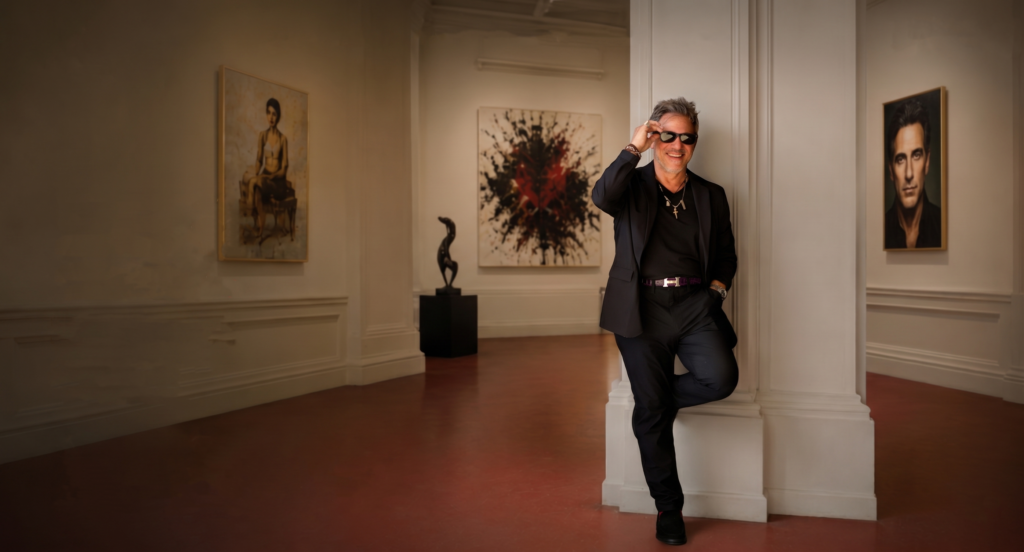
King of Hearts: Salvatore Principe
Early in his career, New York was both playground and palette for artist Salvatore Principe.
He worked as an assistant lighting technician during the heyday of Studio 54, rubbing elbows with the likes of Debbie Harry, Mick Jagger and Andy Warhol.
He later worked at another legendary nightclub, The Underground, before realizing that life was more than a series of last calls. Fueled by an insatiable desire to “create,”
but with no formal training of which to speak, Principe began developing works of
art (mostly sculptures) with found objects and items he pulled from the
city’s trash bins. His persistent hustling earned the artist his first
serious exhibition—a three-week window display at Bergdorf Goodman in
Manhattan. By 29, he had added displays at Saks Fifth Avenue and Tiffany
& Co. to his résumé. Principe’s career was taking off.
And then, in an instant, his world crumbled. Anita
Principe, his mother and best friend, was diagnosed with ovarian cancer;
after a three-year battle, she died at age 48. Principe was
inconsolable; everything in New York reminded him of his mother. In the
early 1990s, he moved to Boca Raton and began dealing with his pain as
only an artist can. He created inspired collages and, later, paintings
decorated with hearts. A signature style was born.
Over the years, Principe has produced hundreds of
memorable art pieces—and built a loyal following along the way. He also
has a cozy studio in Boca (1140 Holland Drive, Suite 7, 800/545-1503) where all the magic happens.
Boca Raton recently sat down with Principe and asked him about his past, present and future.
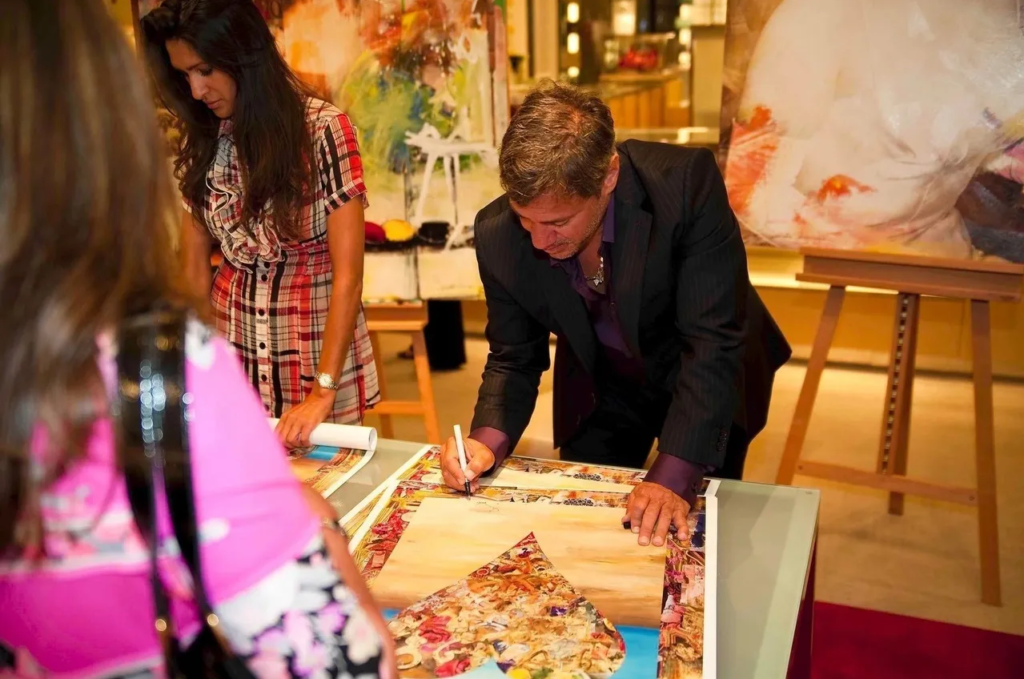
When did you realize you wanted to get into the art scene?
The first artistic endeavor I got involved with was lighting design in nightclubs, particularly at Studio 54 in New York City when I was about 20. And it pertained to a lot of different things—there was a little stage lighting, there was decorative ambient lighting, creating a mood within the nightlife. Also, I was doing things with lights that were like light sculptures on a wall. So the lighting design was a very creative process—and learning about what light can do [became] essential to what I do today. They say lighting is everything, and I get what that means. Then I wanted to stop working in nightlife because it was an unproductive situation. So, I thought about how I wanted to change my life and that day I decided to become an artist. [I’d] never done it before. But from that day, I made a commitment and I never looked back.
What’s an average day like for you in your studio?
I have created a place that, when I walk in, I’m completely inspired at all times to a degree. The studio has an aura, an energy that I’ve created, so it relaxes me and I’m able to create at any moment. I try to be here as much as possible, but to keep things going, I have to continually be out there, looking for another avenue to coincide with what I do.
Where do you draw inspiration from?
Everything inspires me––conversations, people, seeing something at first glance. But meeting people, connecting with people––when I think about them, I’m inspired. I feel good inside when I’m going to see someone that I enjoy being around. So people, at this point, on a whole, inspire me.
What are you working on next?
I plan on exploring different product lines and texture designs. I will be making samples and try to develop them because, ultimately, I want them to be part of the mainstream mass production industry. Furniture, clothing, all of it. But, you need the right partnership for that, so that’s the direction I’m going. I also plan on making custom pieces of furniture from scratch but that’s part of a different project.